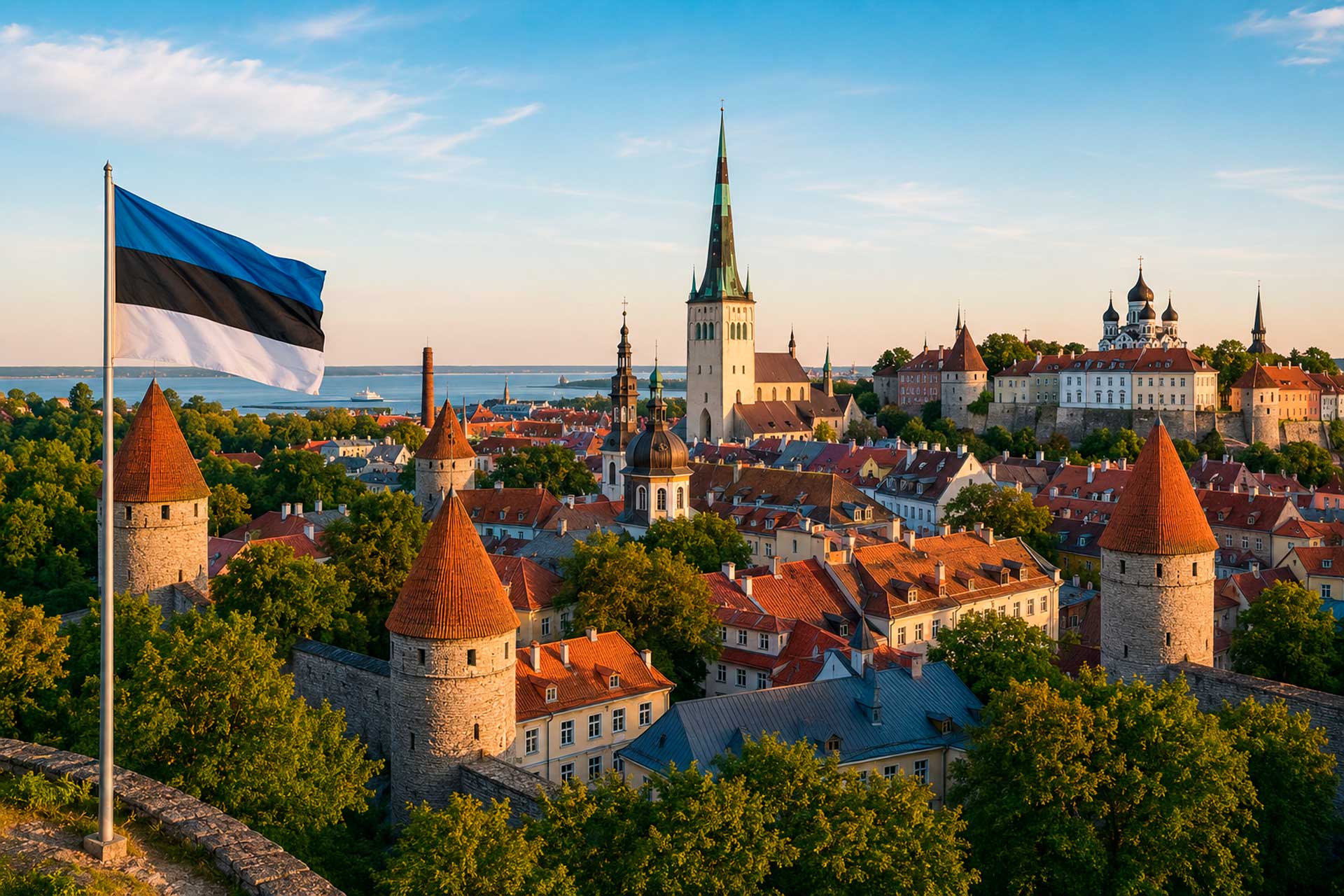
If “cleanest country in the world” means the strongest overall environmental performance on a broad, reputable international index, Estonia is the clearest current winner. The latest Environmental Performance Index ranks Estonia No. 1 overall among 180 countries, ahead of Luxembourg, Germany, Finland, and the United Kingdom. The index is one of the most comprehensive cross-country scorecards in use, combining 58 indicators across climate, environmental health, and ecosystem vitality.
That said, there is no single universal definition of “cleanest.” Estonia leads overall, but the country with the cleanest air in a given year may differ from the country with the best recycling system, the safest tap-water coverage, or the largest protected-area share. In the latest comparable data used here, Estonia stands out on overall performance and very low PM2.5 levels; Germany stands out on municipal recycling; Luxembourg and the UK stand out on protected areas; and Finland and Sweden are exceptionally strong on water and sanitation indicators.
For readers, residents, immigrants, and travelers, the practical takeaway is simple: the cleanest countries combine low air pollution, safe drinking water, reliable sanitation, effective waste systems, and environmental policy that is actually enforced. That combination matters for everyday life far more than any single headline ranking.
How cleanliness is measured
This article uses a multi-metric approach rather than relying on a single list. The backbone is the 2024 Environmental Performance Index, which covers 58 indicators across 11 issue categories and ranks 180 countries. The EPI weights its results across Environmental Health, Climate Change, and Ecosystem Vitality, making it one of the strongest broad proxies for national “cleanliness” and environmental quality.
To make the comparison more tangible, the article also uses several specific indicators. For air quality, it uses country PM2.5 annual averages; for water and sanitation, it uses safely managed drinking water and sanitation services from the WHO/UNICEF Joint Monitoring Programme as published through World Bank data; for biodiversity, it uses protected-area coverage based on Protected Planet / World Bank data; and for waste performance, it uses the latest accessible official or high-quality national/European waste statistics.
A brief caution matters here. Waste statistics are the least “plug-and-play” indicator in international comparisons. Eurostat notes that recycling definitions, municipal-waste coverage, and reporting rules vary, and some countries also publish parallel national methods. Finland is a good example: its 2023 municipal recycling rate is reported as 45% under Method 4 but 51% under Method 2. That is not a contradiction so much as a reminder that methodology shapes rankings.
Air quality also needs context. The World Health Organization’s annual PM2.5 guideline is 5 µg/m³, and WHO says the combined effects of ambient and household air pollution cause about 7 million premature deaths a year. So a country can look visually tidy and still underperform on one of the most important “cleanliness” measures for human health.
Thinking about moving to one of the world’s cleanest countries? Whether you’re interested in a residence permit, permanent residency, or citizenship, our immigration experts can help you choose the right pathway. Leave a request for a consultation and receive personalized guidance.