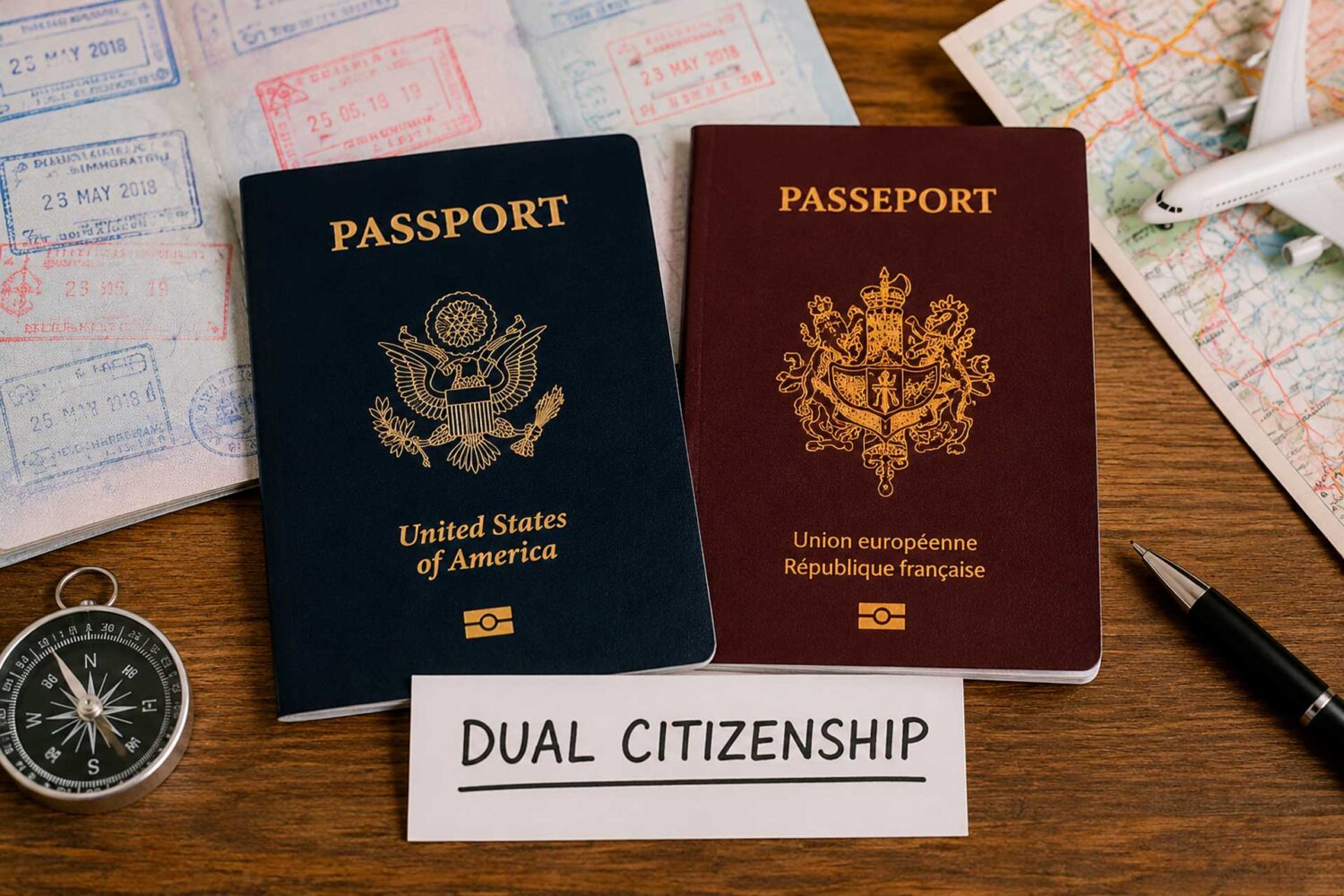
Dual citizenship can open real opportunities, but it also adds real obligations. In simple terms, it means one person is legally recognized by two countries at the same time. It can arise automatically at birth, pass through parents, result from marriage in limited systems, or be obtained later through naturalization or investment programs. The biggest advantages are mobility, residence and work rights, family planning flexibility, and access to two legal systems. The main drawbacks are paperwork, possible military or reporting duties, and tax complexity, especially for U.S. citizens because the United States taxes citizens on worldwide income even when they live abroad.
What Is Dual Citizenship
Simple definition: Dual citizenship means a person is treated as a citizen or national by two countries at the same time.
Official guidance does not use one universal label. The United States usually speaks about dual nationality, Canada uses dual citizenship, and the UK says dual nationality is “also known as dual citizenship.” In practice, these terms are often used interchangeably in public guidance. In stricter legal language, “nationality” usually describes the legal bond to a state, while “citizenship” often emphasizes the rights and duties that come with that bond.
Legally, dual citizenship exists because each country decides for itself who its citizens are. That is why the same person can be recognized by two states at once without filing a special “dual citizenship application.” Canada states this directly: if more than one country recognizes a person as a citizen, that person has dual citizenship.
Yes, a person can have more than two citizenships. The U.S. Department of State expressly notes that someone may hold more than two nationalities and that the same practical issues generally apply. For example, Elon Musk is a well-known example of a person with three citizenships. He was born in South Africa, obtained Canadian citizenship through his mother, and later became a naturalized U.S. citizen.
How Does Dual Citizenship Work
A dual citizen may hold two passports, vote where eligible, live or work in one or both countries, and pass citizenship to children if the relevant laws allow it. At the same time, that person may owe allegiance to both states and may need to obey both countries’ laws. U.S. guidance makes this point clearly: dual nationals owe allegiance to both countries and either country may enforce its laws against them.
In travel practice, a dual citizen often uses different passports for different parts of one trip. The United States requires U.S. citizens, including dual nationals, to enter and leave the United States on a U.S. passport. Canada generally requires dual Canadian citizens boarding a flight to Canada to use a valid Canadian passport, although U.S.-Canadian dual citizens can enter Canada with a valid U.S. passport. The UK now requires British and Irish citizens, including dual citizens, to travel to the UK with a valid British passport or a certificate of entitlement in most ordinary cases.
Government recognition is the key issue. One country may fully accept dual citizenship, another may tolerate it but treat its own citizenship as dominant, and another may require a person to choose one nationality by a deadline. Japan’s Ministry of Justice says people with Japanese and foreign nationality must choose one nationality by a time limit and may lose Japanese nationality if they do not. Estonia remains restrictive as well: its Citizenship Act states that an Estonian citizen may not simultaneously hold another citizenship except under special rules, and minors with both citizenships must choose within three years after turning 18.
A practical rule follows from this: dual citizenship is not just about whether country A permits it. A person keeps both passports only if the laws of both countries permit, tolerate, or at least do not automatically cancel the other nationality.
Not sure if you qualify for dual citizenship? Leave a request for a consultation, and we’ll review your circumstances and recommend the most suitable path forward.